
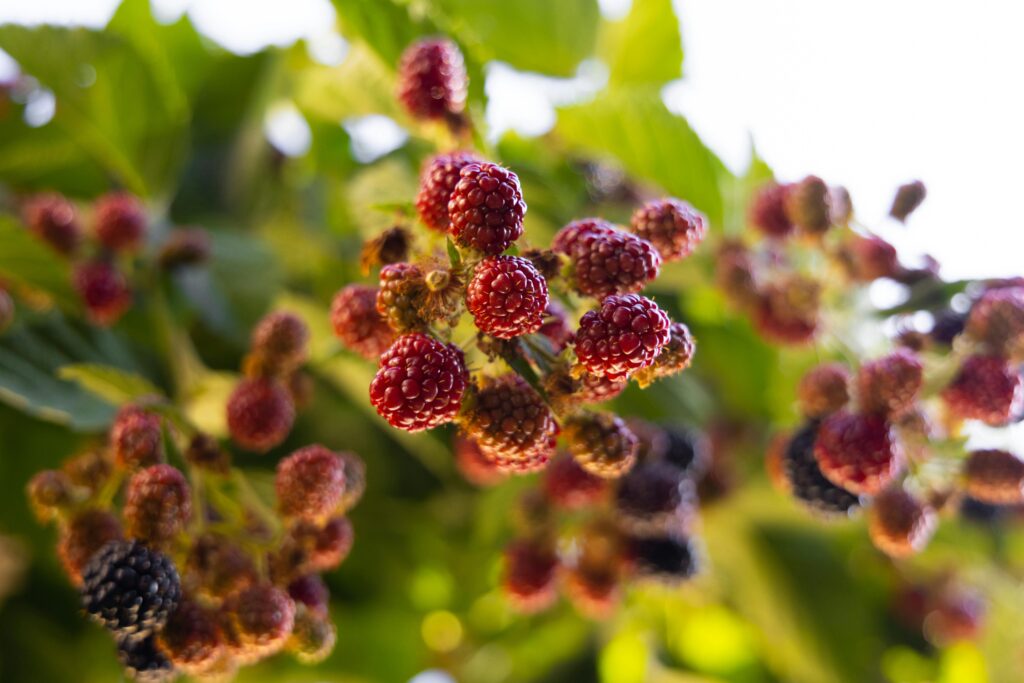
The first year we lived in this home, we noticed a tree in the yard dropping berries. A tree with berries. What? I grew up in the Pacific Northwest where berries are everywhere, I am no stranger to them, but on a tree? That was new. Google Lens told me it was a mulberry, but I did not know which kind or whether the berries were edible. It presented a perfect opportunity to check in with my local Extension Office. Instead of scrolling through forums with conflicting answers, I got a clear, local explanation right away. That is the beauty of having real people and programs to lean on when you are searching for the best gardening resources.
Moments like that remind me that your own experience and observations come first. And yet, beyond that, there are other rich resources available to you, beyond the tomes and paywalls. They show up as people and programs in your community, free, generous, and too often overlooked.
You do not need to be born with a green thumb. You do not even need to know what hardiness zone you are in yet. For the most part, local nurseries carry what grows where you live, and most online sellers use your zip code to guide recommendations.
This is not about where to shop, and it is not a laundry list of links. It is about the real-world helpers in our communities and the way gardening knowledge keeps expanding. New techniques, plants, and varieties appear every season, so there is always more to learn. Leaning on the resources around you helps you spend more time on the parts of gardening you enjoy most.
Master Gardeners: One of the Best Gardening Resources You’ll Ever Find
Of all the resources available to gardeners, the Master Gardener program is the one I feel most drawn to right now. I have applied to join the next training cohort in my county. It is a competitive process with only 25 seats available, and it is only offered every 2 years. I do not know if I will be selected, but the idea of being part of that community excites me.
It is also personal. Both of my parents were Master Gardeners in Washington State, and I saw firsthand how the program shaped not just their gardening, but their connection to their community. What makes it unique is that you are not a “Master Gardener” in the broad sense. You are trained for your specific region; your soil, your climate, and your ecosystems. This is where I surprise myself. I have written before about not wanting to be pigeonholed into a niche, but this is the exception that makes sense. It does not help me to know what thrives in Hawaii when I am wrestling with Illinois clay and invasive burdock. Gardening knowledge has to be local. The weeds, pests, and even the length of the growing season are different from place to place. A Master Gardener in Illinois does not need to master the whole country. They need to master what grows here.
That is why the program matters. It trains volunteers to serve their own communities: answering questions, leading workshops, staffing plant clinics, and sharing knowledge in ways that ripple far beyond one person’s backyard. The program is about generosity, not gatekeeping. And what makes it even more powerful is that it is volunteer-driven. Neighbors share their time and training freely, so the knowledge stays rooted in the community rather than behind a price tag.
That support shows up in ways both big and small. Maybe you are curious about which native plants will draw more pollinators into your garden, or how to balance companion planting so your vegetables thrive side by side. Maybe you have tried the same battle with the same pest for years and just want to know what actually works here, in this soil, in this climate. Those are the kinds of questions Master Gardeners are trained to answer, and they answer them with your community in mind.
It does not stop at plants. Master Gardener groups often host seed swaps and compost giveaways, offer workshops on topics like vermiculture or rain gardens, and set up seasonal plant clinics where you can bring clippings or photos for help. They are constantly expanding what they share, which means the resources grow right along with your questions.
When our onion bulbs bloomed last spring and were suddenly covered with bees, I was overjoyed. That single moment of delight also nudged me to start learning more about pollinator-friendly design. I ended up digging into how to create a small pollinator pocket garden, something I would not have thought about if I had not asked questions and tapped into the resources around me. It is a perfect example of how curiosity plus community can open new doors.
Learning Feels Different When You’re Not Alone
Part of why the Master Gardener program appeals to me is where I am right now in my own gardening. I love being outside, and I love that my yard feels like a blank canvas. It is not overgrown or wild, but it has not really been tended to in years. Volunteer plants have popped up in unexpected places, the soil needs work, and the drainage could be better. I am working with a landscaper on the heavy lifting, but the designs are mine, and together we are creating spaces I will be able to enjoy and continue shaping for years.
As I tackle these projects, the Master Gardener program has been a godsend. I can take in clippings of trees or pictures of weeds and ask, “What is this? Should I keep it? Does it help the soil? Does it benefit pollinators?” And the advice is always thoughtful and practical. That kind of guidance feeds my curiosity. For me, gardening is not about collecting facts. It is about being immersed in a community that shares the same excitement for watching things grow.
Some of this love of detail I know I get from my parents. They were Master Gardeners in Washington State, and I remember how they could latch onto an idea, soil amendments for instance, and weave it into every conversation. I probably do the same thing. What works in the rich soil of Washington does not always apply in Georgia clay, or even in the clay-heavy patches here in Illinois. And that is exactly the kind of region-specific guidance Master Gardeners excel at providing.
That variety is part of what keeps me interested. Gardening never narrows me down to one subject. It branches out into endless directions. One week I might be learning about composting, the next I am at a workshop on grasses and sedges. Grasses were never “my thing,” but I came away fascinated by how they provide habitat for butterflies to form their chrysalis. Even the parts of gardening I do not plan to pursue open doors to new ways of seeing. That, to me, is the heart of why I want to grow alongside a community of Master Gardeners.
Extension Services: Growing More Than Just Plants
Cooperative Extension Services were created more than a century ago through federal legislation to bring university research to everyday people. While many gardeners know them for plant clinics, soil testing, and Master Gardener programs, their work stretches much further. In many communities, Extension fills gaps the education system leaves behind: offering financial literacy workshops, nutrition and SNAP outreach, computer literacy, and 4-H programs that connect kids to agriculture and home skills. In other words, they do not just grow healthier plants. They grow healthier, more resilient communities.
Your Local Gardens Are Teaching More Than You Realize
I tend to think of botanical gardens and arboretums as beautiful places to walk, and they are. But their programs are surprisingly wide; cooking classes that connect what is growing to what is on the plate, kids’ activities that spark curiosity, design workshops that show how to shape a bed or border, even seasonal talks that highlight what thrives locally. Some partner with libraries through cultural-pass programs so families can visit at reduced or no cost. These are not just strolls through pretty grounds. They are invitations to learn.
Looking back, I realize how many times I walked past a class or demonstration at a botanic garden without stopping. Those were not just pretty displays. They were resources waiting for me to use. From native plant sections to chef demos, they are designed to show what thrives in your region and why. If you have kids in your life, these visits can become shared experiments: count the pollinators under the coneflowers, smell the herbs, and then try one new thing at home. Learning is easier when you can see it and taste it.
Practical Tip: Check your library’s cultural-pass listings. Programs like Explore More Illinois or Museum Adventure Pass often include gardens and museums with free admission or parking discounts, which lowers the barrier to just getting there. Once you are on the grounds, the learning tends to take care of itself.
Finding the Good Stuff Online (Without Getting Lost in the Noise)
Online advice really is a mixed bag, but that is not a bad thing. It just means you have to be a little surgical about what you take in. Some of it is shallow or trendy, but plenty of it is thoughtful and worth your time.
One of my favorite examples is Ron Finley’s MasterClass. His approach; use what you have, grow where you can, and do not wait for perfect conditions, resonates deeply with me. I think he strikes such a chord because it is the same principle my dad lived by, do not waste what still has value. But his message goes further than resourcefulness. He is about urban gardening, taking back empty lots and front yards in places where fresh food can be hard to come by. It is non-traditional, it is topical, and it is a reminder that gardening is not just about beauty. It is also about access, resilience, and community. His work shows that even online, the best voices are rooted in real communities tackling real problems. That is what makes them trustworthy resources.
It is not just online classes. For years, gardeners tuned into TV shows and local personalities, like Ed Hume in the Seattle area where I grew up, for practical, region-specific advice. Today you can still find that kind of expertise in places like Gardeners’ World with Monty Don in the UK, much of which is now accessible on YouTube. Where Finley brings urgency and resourcefulness, Monty Don offers calm encouragement. His long-running program has become almost a mantra for gardeners everywhere: do not chase perfection, just keep growing. And closer to home, I have been enjoying Margaret Roach’s A Way to Garden, where she brings an artist’s eye to plant placement, showing how gardens can draw the eye across a space to a focal point.
The point is, you do not have to reinvent the wheel. The tools are out there, whether in structured classes, trusted voices online, or long-standing programs that have adapted to new platforms. The key is choosing sources that not only explain, but also match your own gardening style and approach. Because the best learning sticks when it resonates with the way you already think and create.
What Your Neighbors Can Teach You Without Saying a Word
Not all learning happens through programs or classes. Sometimes it is about observation. What is your neighbor growing? How does your family approach their gardens?
I always chuckle at my family’s zucchini jokes: how easy they say zucchini is to grow, how fast it multiplies, how everyone ends up with too much. But I cannot grow a zucchini to save my life. I get half of one and cheer like I have won the lottery. Yet tomatoes? I can grow tomatoes all day long. That disparity taught me that your own habits, soil, climate, and even what you tend to with love matter a lot.
I think of my sister on her small farm, moving her chicken coop so the ground it sat on becomes a nutrient-rich garden bed the next year, or repurposing an old kiddie pool to grow vegetables. Her style is different from mine, but it works for her. I watch Gabby and some of her friends from book club garden in ways that look less precise, less planned than mine, yet they are wildly productive.
Watching how other people garden becomes a living resource in itself, just as valuable as a class or a book, because it shows you what actually works in the hands of real people. It reminds you that gardening is not measured by how tidy your bed is. It is measured by what grows, what you learn, and what you enjoy.
Bringing the Best Gardening Resources Back Home
The best gardening resources are not always the ones that come in glossy catalogs or sit behind expensive paywalls. More often, they are the people, programs, and places rooted right in your community. Master Gardeners, Extension Services, botanical gardens, local experts, even thoughtful voices online: they all invite us to keep learning, keep asking, and keep growing.
Because gardening is never just about what comes up from the soil. It is about what grows in us: curiosity, generosity, and resilience. And for me, it is about bringing all of this learning home, integrating it into the re-shaping of my own yard, where each season feels like a new beginning.