
Scattering the First Seeds
I was in the garden scattering seed for a fall cover crop, a mix of buckwheat across the long flower bed that had worked hard all season. The motion was steady and familiar, a kind of moving meditation. I knew why I was doing it, to rest the soil, to feed it, to prepare for what comes next, but as I worked, I began noticing the structure within the act itself. Every handful of seed was a decision about balance: what would thrive, what needed rest, and how long the ground should recover before something new took hold.
That quiet observation stayed with me. It felt connected to more than soil. The same kind of design shows up everywhere in the systems I build, the projects I manage, and the small routines that keep my days from scattering. What I was doing in the garden wasn’t just planting; it was setting up a pattern that would quietly do its work long after I stepped away. It was a simple form of a self-sustaining system, structure that carries its care forward.
Living systems behave that way. They don’t simply grow; they participate. They hold what’s good, release what’s done, and keep energy moving through small, steady acts of care.
The Nature of Living Systems
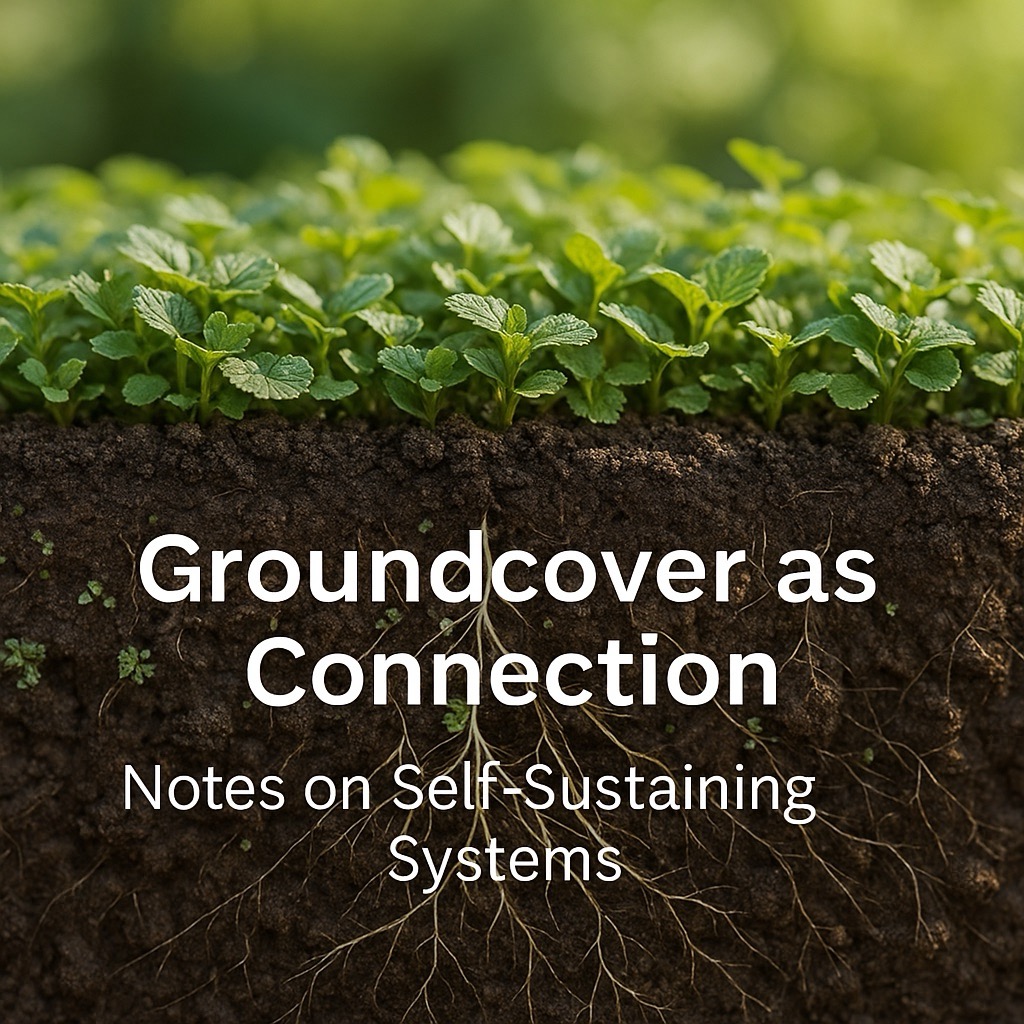
The best groundcovers don’t just hide the soil. They work it. They hold what’s vital, filter what’s not, and give back as they grow. Buckwheat, clover, thyme, each plays a role in keeping balance, suppressing chaos while feeding what sustains life.
That’s what structure, at its best, does. It fills the spaces in between. It reduces friction, restores rhythm, and keeps life connected enough to move smoothly through change. When we build self-sustaining systems, they behave the same way, holding what matters and quietly returning energy to what supports them.
When I scattered the buckwheat, I knew it was temporary. It’s what you plant when the soil is tired, a bridge between exhaustion and renewal. It grows fast, holds ground, and leaves the bed richer when it’s turned under.
Later, sitting at my desk, I noticed the same quiet logic in the spreadsheet open in front of me. Different setting, same principle: a design meant to behave like a self-sustaining system, simple, functional, and quietly alive.
Systems That Translate
If you’ve worked with spreadsheets, you’ve likely used a helper cell. Usually it’s a temporary formula, a small assist that carries one step of the logic to the next. Sometimes it’s a bridge that splits data for a while, then disappears when the job is done. Other times it stays, quietly updating whenever something else changes. It’s not always a formula, but it’s always a kind of connection, the piece that helps everything else make sense.
The same is true in the garden. Buckwheat is my temporary helper. It holds space, adds what’s missing, and prepares the ground for what comes next. Thyme, on the other hand, is a long-term collaborator. It stays put, prevents erosion, adds fragrance, and fills the empty spots so I don’t have to mulch every year. Both serve their purpose. The work is knowing which you need and how long to let it stay.
Most of life runs on these quiet helpers, the small, often unseen systems that keep things moving while our attention turns elsewhere. They don’t ask for recognition, but without them, everything unravels. Family routines, shared tools, the weekly reset, all behave like good soil, quietly holding what needs to hold.
This is the everyday logic of self-sustaining systems, built once, tended lightly, continuing to serve without demanding constant repair.
Three Kinds of Structure
Over time, I’ve started to see structure the way I see groundcover. Each kind has its own temperament, season, and purpose.
Some are buckwheat systems, built for recovery. They stabilize, suppress chaos, and end gracefully. These are the short-term supports that carry us through disruption: a temporary budget, a morning checklist, a reset routine. They’re not meant to last forever; their value is in restoring what’s depleted.
Others are clover systems, sustaining and symbiotic. They feed the environment around them and maintain steady rhythm. These are the recurring structures that keep life balanced: the shared calendar, the end-of-week tidy-up, the habits that quietly reset the week. They run so smoothly we forget they’re there, but they form the quiet spine of continuity.
And then there’s thyme, the enduring kind. It takes longer to root but defines the rhythm of the bed once it does. These are the structures that stay because they keep meaning alive: the frameworks that make work feel purposeful and the spaces that remind us why the care matters.
The work isn’t choosing one type over another. It’s knowing which belongs to the moment and having the humility to shift when the season changes. Self-sustaining systems depend on this flexibility, the ability to adapt structure to the rhythm of need.
The Common Work
No matter the type, the purpose is the same: to fill the spaces in between and hold things steady until they can hold themselves.
In a garden, that means fewer weeds and richer soil. In a spreadsheet, it means cleaner data and fewer errors. In a life, it means fewer fires to put out and more time for the work that truly matters.
Good systems reduce noise, strengthen connection, and maintain stability, three quiet acts of continuity that make everything else possible. They’re the connective tissue that allows larger systems to function smoothly, the subtle threads that let attention renew itself instead of burn out. That’s what defines a self-sustaining system: it creates conditions where care continues even when attention shifts.
This is the quiet generosity of structure. It gives order a rhythm and allows care to flow without constant correction. When we design for continuity, we’re really designing for self-sustaining systems, ones that preserve energy instead of consuming it.
When Systems Learn to Tend Themselves
There’s a moment when something you’ve built begins to run on its own. For me, that moment is both satisfying and unsettling. I love the build, the planning, the setup, the first signs of order taking shape. Maintenance, though, has never been my strength. I tend to move on before I notice what needs to be refreshed. That may be part of why I love gardening. Each season offers a new version of the same system to create. It never stays static; it renews itself through the cycle.
A well-designed calendar doesn’t just remind you of appointments; it changes how you think about time. A reliable workflow doesn’t only track tasks; it shapes how you think about progress. Even the simplest routine, once it finds its rhythm, starts to carry its own quiet intelligence forward. That is the hallmark of a self-sustaining system: built with care, it begins to care back.
Even the best systems, though, need rest. Just as a cover crop is eventually turned under to nourish what follows, our structures should be allowed to end. Healthy systems are designed with an exit in mind, closing in ways that feed continuity rather than resist it.
A system that ends well leaves the ground richer than it found it.
The Return
A week later, the buckwheat had come up, fine red stems with soft green leaves just beginning to unfold. They’ll grow fast and do their work while the weather still holds, protecting the soil until the first frost. That’s all I need from them. Their purpose isn’t to bloom or reseed, only to feed the ground and prepare it for what comes next.
That’s what good structure does. It doesn’t have to last to matter. It holds what’s fragile, feeds what’s buried, and restores what will eventually support something new. It fills the spaces between the visible work, keeping everything connected and quietly alive.
Whether it’s soil, data, or daily rhythm, the principle is the same: build care into the structure itself so it can keep tending things when attention moves elsewhere. That is the essence of self-sustaining systems, not permanence, but participation; not control, but connection. Each one doing its small, steady part to leave the ground of our lives a little stronger than it was before.
If you’re curious about the practical side — how living mulch and groundcover create self-sustaining balance in the garden — you can find more in Living Mulch: Covering Ground the Smart Way on the byKathi Plantelligence site.